Autism Awareness & Acceptance Month: What Is It and How to Get Involved

Three happy kids smiling.

Every April, we celebrate autism awareness month, but this month goes far beyond just awareness. At Surpass, we are dedicated to spreading understanding, acceptance, and inclusion for individuals with autism spectrum disorder (ASD) and other developmental delays. Embracing neurodiversity and the creativity it brings to our world is key as we strive for inclusivity within our communities. In this blog, you’ll find everything you need to know about autism awareness month and ways you can get involved this month and beyond.

What is Autism Awareness Month?

Autism awareness month is celebrated in April each year. It is a chance to advocate for further knowledge and support for the ASD community. You may hear this month called by several names, including Autism Acceptance Month, World Autism Acceptance Month, or Neurodiversity Celebration Month. This variety reflects the community’s shift toward deeper appreciation and understanding for individuals on the spectrum.

Communities worldwide host events and initiatives throughout April to raise awareness and support for autism. Whether you are directly impacted by autism or not, all are welcome at these events. The more advocates, the better!

Ways to Get Involved During Autism Acceptance Month

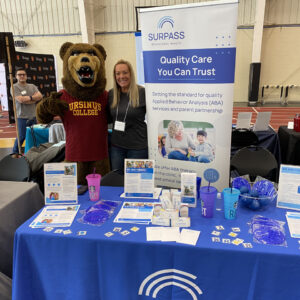
Employees at company booth at sports event.

1. Educate Yourself & Others About Autism

Empower yourself with knowledge about autism by exploring reliable sources such as books, articles, and reputable websites – the Surpass blog is a great place to start! Being able to explain to others and answer questions makes a big impact when trying to educate and promote inclusivity within our communities. Listening attentively to the experiences of individuals with autism is always a valuable way to understand the needs of the community.

2. Foster Inclusive Environments in Your Community

Creating welcoming spaces where everyone feels valued and respected is vital for promoting autism awareness and acceptance. Consider implementing sensory-friendly practices like reducing noise, providing visual schedules, and offering quiet areas in schools, workplaces, and communities. Promote understanding among family, friends, and colleagues to nurture a culture of acceptance for individuals with ASD.

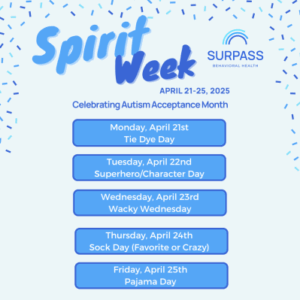
Spirit Week flyer for autism month.3. Support Local Inclusive Events

Boost awareness, acceptance, and advocacy for individuals with autism by supporting autism organizations and attending events in your community. Participate in autism awareness events, donate your time or money to trusted autism organizations, or organize a spirit week at your school or workplace.

Looking for a fun and inclusive event to attend? Surpass clinics host community events across clinic locations throughout the year. Check out the Surpass Facebook page for upcoming events.

4. Advocate for Individuals with Autism

Encourage understanding and acceptance of neurodiversity in your community by ensuring that everyone is welcomed and treated with dignity. Cultivate inclusivity by spreading kindness to individuals with autism during Autism Acceptance Month and beyond. An easy and accessible way to do this is by sharing educational or advocating messages on your social media platforms. You can find some inspiring stories and posts to share on the Surpass Instagram or Facebook pages!

By embracing autism awareness month, you play a vital role in promoting a more inclusive and supportive world for individuals with autism. Let’s work together to foster understanding, acceptance, and celebrate neurodiversity.

Frequently Asked Questions About Autism

What is autism spectrum disorder? 

Autism spectrum disorder (ASD) is a lifelong developmental difference that affects how people perceive the world and interact with others. Because it is a “spectrum,” it looks different for everyone. At its core, autism is a neurological variation meaning that the brain is simply “wired” differently. Autistic individuals have unique strengths as well as some challenges that can be aided through therapy or support services. At Surpass, we don’t see autism as something to be “fixed,” but rather a unique way of experiencing the world that deserves understanding, support, and celebration!

What are common signs of autism?

Because autism is a spectrum, there is no single “look” or set of behaviors that apply to every person with ASD. It is important to remember that every individual develops at their own pace, and everyone – neurodivergent or neurotypical – has their own set of strengths and challenges. Some high-level common signs that a child or adult might be on the spectrum include challenges with social communication, repetitive behaviors or stimming, or sensory sensitivities. For a more extensive guide on the signs of autism all the way from babies to teens, check out this helpful blog post: Signs of Autism at Every Age: A Parent’s Guide for Babies, Children, and Teens.

What is ABA therapy and how does it support individuals on the spectrum? 

Applied behavior analysis (ABA) is an evidence-based therapy that focuses on improving specific behaviors and building meaningful life skills. There is a lot of dialogue out there about ABA therapy, but it is important to recognize that modern ABA focuses on improving quality of life rather than trying to “change” a person with autism. ABA therapy at Surpass is centered around creating an environment where every patient feels happy, relaxed, and engaged (HRE) so that learning is fun and effective. Our goal is to empower autistic individuals to navigate the world with confidence while celebrating their unique neurodivergent traits.

If you are seeking therapy services from a trusted provider, contact us today! Our team is happy to help you navigate your options wherever you’re at in your journey with autism.

Happy autism awareness, acceptance, and advocacy month!

Learn more about our services or find a clinic near you.