

Are you passionate about making a positive impact in the lives of children with developmental disabilities? If you find fulfillment in helping others achieve their goals and improve their quality of life, becoming a Registered Behavior Technician (RBT) might be the perfect career path for you.
What is an RBT?
An RBT is a behavioral health paraprofessional who works under the supervision of a Board Certified Behavior Analyst (BCBA) to provide Applied Behavior Analysis (ABA therapy) to children with autism spectrum disorder (ASD). RBTs play an important role in implementing behavior intervention plans, collecting data, and supporting growth for children with autism. They help children with autism develop essential daily living skills, improve communication, and reduce problematic behaviors.
4 Reasons to Choose a Career as an RBT
- RBTs make a meaningful impact on the lives of children with autism and their families. By implementing ABA therapy strategies, RBTs help their clients gain necessary skills to improve their quality of life.
- As the autism diagnosis rate rises, there is a growing need for RBTs across the country and in a variety of settings including clinical settings, home settings, and school settings. This allows RBTs the flexibility to work where they want.
- By choosing a career where you make a direct impact on the lives of others, you are sure to feel fulfilled and rewarded by the work you do.
- As an RBT, there are numerous opportunities for personal and professional growth. Many RBTs choose to pursue advanced degrees and certifications to become BCBAs, which opens doors to specialized and advanced roles.
Steps to Become an RBT
To become a RBT, you must follow the steps to receive your certification through the Behavior Analyst Certification Board (BACB).
Meet the eligibility requirements.
To qualify to become an RBT, you must be 18 years old, have at least a high school-level education or equivalent, and pass a background check.
Complete the 40-hour RBT training course.
To attain your RBT certification, you must complete a 40-hour RBT training program through a certified provider. Several employers, such as Surpass Behavioral Health, include this training program as a part of the onboarding process for Behavior Technicians/RBTs. This training course covers the fundamentals of ABA therapy, ethical considerations, data collection, and strategies for behavior intervention.
Pass the RBT competency exam.
After completing the RBT training program, you must pass an RBT competency assessment conducted by a BCBA or qualified behavioral health professional. This practical assessment demonstrates your ability to perform various RBT tasks, ensuring you are ready to work one-on-one with clients.
Apply to the BACB.
Once you pass the competency assessment, you can apply for your RBT certification through the BACB to be able to take the official RBT exam. The RBT application process includes submitting your training certifications, competency assessment, and background check.
Pass the RBT exam.
The final step to receiving your RBT certification is the RBT exam. This administered exam tests your knowledge of ABA principles, ethical considerations, and practical applications of behavior analysis. This exam consists of 85 multiple-choice questions.
Becoming a Registered Behavior Technician is a rewarding career choice for those who are passionate about helping children with developmental disabilities. By following the steps outlined above and dedicating yourself to continuous learning, you can make a meaningful impact in the lives of others while enjoying a fulfilling career.
Become an RBT at Surpass Behavioral Health
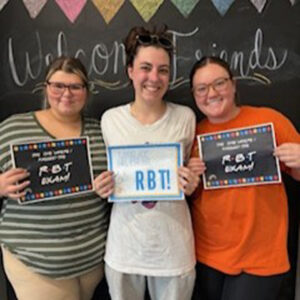 Surpass Behavioral Health is hiring RBTs for clinic-based, in-home, and school-based positions in Georgia, Illinois, Kentucky, Pennsylvania, and South Carolina. No prior RBT certification is necessary, as we provide paid training and certification through our onboarding process. For RBTs looking to advance their careers and become BCBAs, Surpass offers tuition discounts and mentorship programs to support your journey. Join a team that values and recognizes the important work you do.