
Sensory sensitivities for children and individuals with autism spectrum disorder (ASD) can lead to challenges in essential life activities like getting a haircut. This common struggle for parents and caregivers can lead to concern about hygiene maintenance and can become problematic in the long term. However, all hopes are not lost.
Meet, Jacob and Laura!
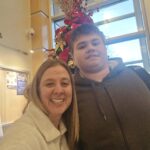
Jacob’s Journey with Positive Behavior Support Services
When Jacob was little, his parents began noticing inconsistencies in his developmental milestones. While he was walking very early on, his speech and communication skills were not progressing as expected. After discussions with their pediatrician, Jacob began speech therapy and the process of getting screened and then diagnosed with autism spectrum disorder. Shortly after, he started receiving positive behavior support services (PBSS) via the Michelle P Waiver (MPW) where they met Laura, and everything began to change.
About 11 years ago, Jacob and Laura started working together to support Jacob’s unique needs and essential life skills. They started by focusing on communication skills that led to Jacob receiving an augmentative and alternative communication (AAC) device. This was a huge breakthrough for Jacob and allowed him to progress with his communication and eventually transition to working on functional life skills that would allow him to become more independent.
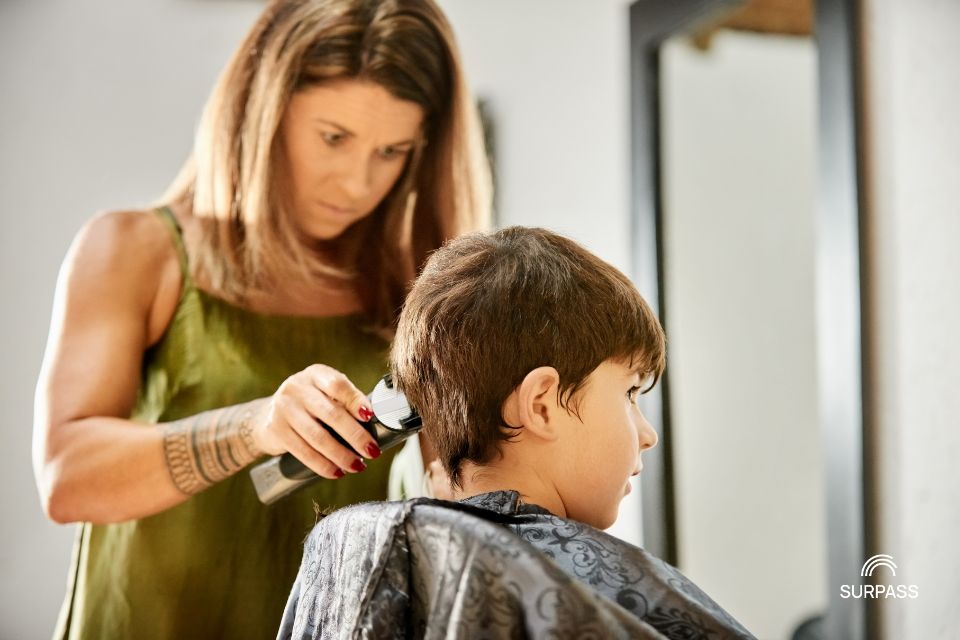
Fast forward a little over a decade and Laura and Jacob are still learning and growing side-by-side. Jacob has achieved several milestones over the years but most recently, he was able to go to a local barbershop and get a haircut for the first time since he was two years old.
Check him out!
Tips for Parents Preparing an Autistic Child for a Haircut*
Haircuts can be tough for any child, but with added sensory sensitivities it can be extra tough. For Jacob, the buzzing sound of the clippers, the feeling of hair being removed or falling on him, and the intimidating chair that he had to sit in for the cut made the experience feel scary. For several years, Jacob’s mom was able to trim his hair at home in the bathtub, but as he was getting older and began growing facial hair, it was becoming clear that they needed support from Laura and PBSS to transition to a barbershop.
Step 1: Social Stories
Social stories about upcoming experiences have always been a helpful tool for Jacob. He started reading social stories about haircuts and shaving – why they are necessary, what the environment and tools might look like, the sounds he may hear, and more.
Step 2: Environmental Simulation
Once Laura had opened conversations about haircuts with Jacob, she found an app called ‘real razor’ that makes buzzing and vibrating sounds similar to that of a hair trimmer. For a little while they just listened and talked about the sounds, then they began practicing bringing the sounds near his shoulders, neck, and ears.
Step 3: Find the Right Barber
Finding a barbershop or salon that will be understanding and patient – possibly even trained – to work with individuals with autism or special sensory needs is key to success!
Laura says “I couldn’t go to just any barbershop. We needed someone who was going to be patient …. so, it wouldn’t be overwhelming with all the lights and sounds.”
That is when she found Sam Greer at Precision Studios in Owensboro, Kentucky. Sam is very passionate about supporting kids and adults with special needs and invited Jacob and Laura to visit, ask questions, and create a specialized experience that was comfortable as possible.
Step 4: Visit and Observe
Once connected with Sam at Precision Studios, Laura and Jacob were able to walk around the shop to familiarize themselves with the room, the equipment, and all of the sensory stimuli that was present. They got to watch other people get their hair cut, and Laura talked with Jacob about what he thought they might be feeling and experiencing.
Step 5: A ‘No Pressure’ Trial
During Jacob’s second visit he was interested in trying on the haircut cape and interacting with the clippers and tools that Sam would use. Jacob got to turn on his favorite show, Storybots, and eventually felt comfortable sitting in the barber chair – a huge win!
Step 6: Try It Out
While sitting in the chair, watching Storybots, feeling comfortable with the support of Laura and the kindness and patience of Sam, Jacob got his first haircut in a barbershop since he was 2 years old!
*It is important to note that each one of these steps will take a different amount of time for each person. It could take days, weeks, or months, and lots of repetition to progress along each step. It is most important that the individual feels safe and confident every step of the way.
How Positive Behavior Supports or ABA Therapy Can Help
Through continuous and collaborative support from passionate clinicians at Surpass Behavioral Health, Jacob and so many other individuals like him have been able to achieve lifechanging milestones.
Jacob’s mother, Jennifer, has one piece of advice for parents of children with special needs and it’s this, “find a village… Surpass is part of our village.”
If you or your child need further support to reach developmental milestones or you are looking for special needs services, contact us today!
Positive behavior support services are available to Kentucky individuals with intellectual or developmental disabilities through the 1915(c) Home and Community Based Service (HCBS) Medicaid waiver programs including: Michelle P Waiver (MPW), Supports for Community Living Waiver (SCL), and Acquired Brain Injury Waivers (ABI-Acute/ABI-LTC). You can learn more and inquire about services on our website.
For in-clinic autism support, Surpass provides applied behavior analysis (ABA) therapy across three states – Kentucky, South Carolina, and Georgia. Check out our locations and contact us today to begin your child’s journey to reach their milestone moments.
*** Informed consent was obtained from all participants and/or guardians featured in this content.